How Do the Best CBSE Schools in Pitampura Prepare Students for Real-World Problem Solving?
A child who can memorise an answer may do well in a test, but can they use that knowledge when something unexpected happens? That is a different kind of learning, and it is becoming an important part of school education. When parents compare the Best CBSE Schools in Pitampura, they should look beyond marks and textbooks to understand how students are taught to think, question, make decisions and solve everyday problems.

Real-world problem-solving develops when children get opportunities to apply classroom lessons instead of simply remembering them. A science concept becomes more meaningful when students experiment with it. Mathematics feels practical when they use it to calculate measurements, manage time or understand money.
Learning Through Questions, Not Just Answers
A classroom should give children the confidence to ask questions, share opinions and explore different ways of reaching an answer.
For example, instead of asking students only to memorise facts about plants, a teacher might ask them why some plants grow better in sunlight than others. Children can observe, compare and discuss their findings. This simple activity introduces them to observation, reasoning and basic analysis.
Such teaching encourages students to understand the logic behind a concept. It also helps them become comfortable with questions that may have more than one possible solution.
How Do Classroom Activities Build Practical Thinking?
Activities, group assignments and classroom discussions allow children to connect lessons with situations they may encounter outside school.
Consider a group project where students have to plan a small classroom garden. They need to decide which plants to choose, estimate the space required, divide responsibilities and work within available resources. Along the way, they practise mathematics, communication, teamwork and decision-making without treating these as separate subjects.
These experiences also teach children that mistakes are part of learning. If an idea does not work, they can discuss what went wrong and try another approach.
Why Are Communication and Teamwork Important?
Solving a problem does not always mean working alone. In school, children regularly face situations where they need to listen, explain their thinking and reach an agreement with others.
Group discussions, presentations, role-play and collaborative assignments help develop these abilities. A student who disagrees with a classmate learns to explain their point respectfully. Another who takes responsibility for a group task begins understanding accountability.
Parents exploring a KG School in Pitampura should also pay attention to these early experiences. At this age, sharing toys, following instructions, expressing needs and participating in group activities are valuable foundations for future learning.
Does Practical Learning Matter in Early Education?
Yes. Children do not have to wait until middle or senior school to begin developing problem-solving abilities.
For younger learners, simple activities such as sorting objects, completing puzzles, building blocks, storytelling and pretend play encourage observation and decision-making. These activities may look like ordinary play, but they help children understand patterns, relationships, instructions and consequences.
Parents searching for the best play school in Pitampura Delhi can ask how the school balances structured learning with creative and hands-on activities. A child's early classroom experience should encourage curiosity rather than make learning feel like a series of tasks to complete.
What Should Parents Observe During a School Visit?
A school's teaching approach becomes easier to understand when parents see the classroom in action. Instead of focusing only on infrastructure, notice how students and teachers interact.
Look for these signs:
Student participation: Do children get opportunities to ask questions and share ideas?
Practical activities: Are lessons supported by experiments, projects, demonstrations or creative tasks?
Teacher support: Do teachers explain concepts patiently when students struggle?
Collaborative learning: Are children encouraged to work and solve tasks together?
Creative expression: Do students get opportunities to present ideas through art, discussion and activities?
These observations can reveal more about everyday learning than a brochure or an academic result sheet.
How HRM Global School Connects Learning With Development
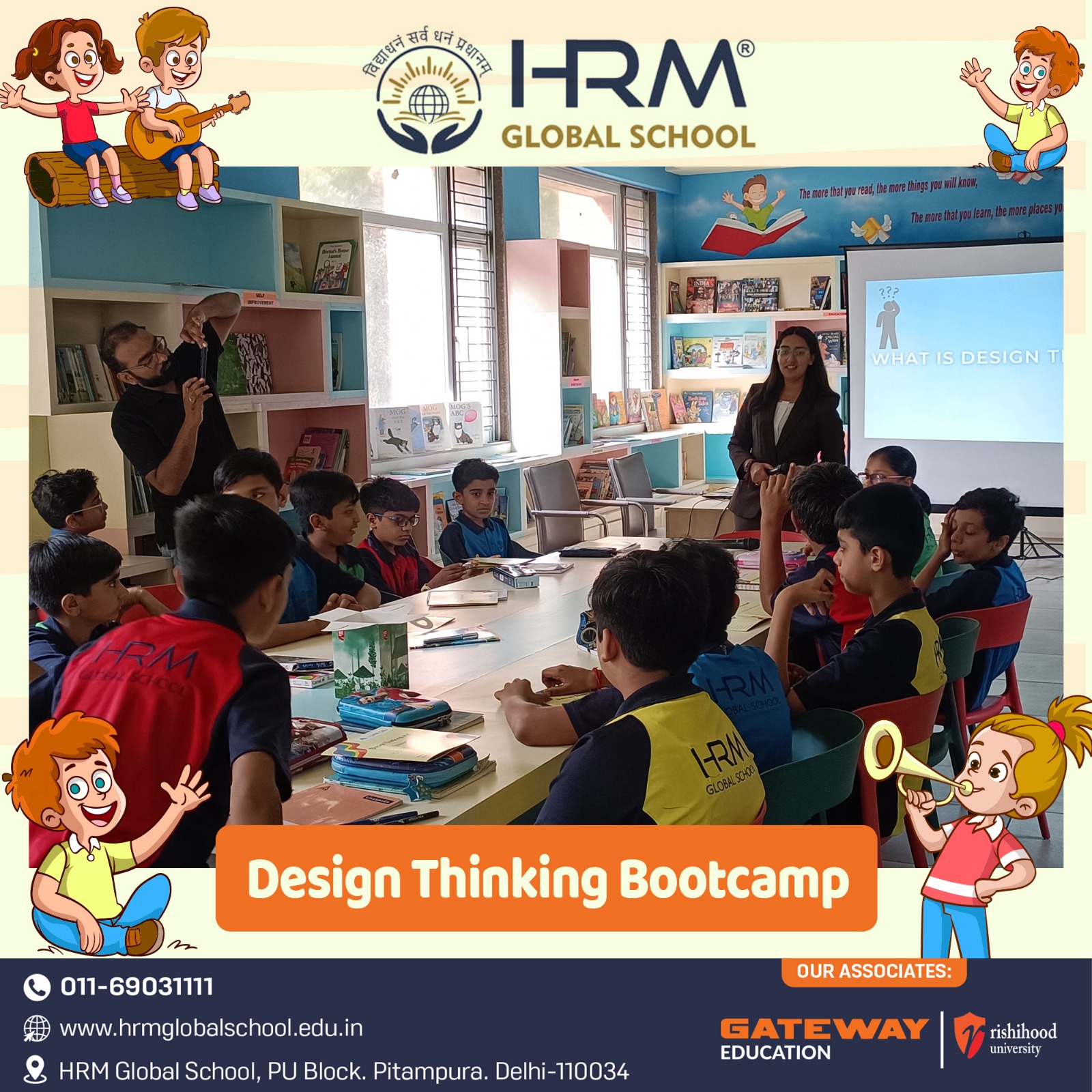
At HRM Global School, parents can explore how the school's learning environment, including its classrooms, library, science and computer labs, sports facilities and activity spaces, supports different aspects of student development.
These facilities become meaningful when children get opportunities to use them for exploration, practice and participation. Parents should discuss with the school how classroom teaching, practical activities and co-curricular experiences are incorporated into students' daily routines.
Choosing a School That Prepares Children for Life
Academic knowledge remains essential, but children also need the confidence to use what they learn. Critical thinking, communication, creativity, teamwork and independent decision-making develop through regular practice, not through textbooks alone.
When evaluating schools, parents should look for an environment where children are encouraged to ask why, try different approaches and learn from mistakes. A school that makes room for these experiences helps students prepare not just for examinations, but also for the situations and decisions they will encounter as they grow.


Comments
Post a Comment